Innovatie is cruciaal voor bedrijven, instellingen en samenlevingen. Nieuwe producten, diensten en oplossingen stimuleren economische groei, duurzame ontwikkeling en welzijn. Hightech innovatieve oplossingen, ontwikkeld door zowel gevestigde organisaties als start-ups, helpen nieuwe en bestaande klanten en gebruikers een duurzamere toekomst te creëren. Maar bij innovatieprocessen komt een hoge mate van onzekerheid kijken, en veel innovaties maken hun potentieel niet waar.
Het masterprogramma Innovation Management leert je hoe je het beste kunt omgaan met de onzekerheid en de uitdagende afwegingen die centraal staan bij innovatie. Ook leer je hoe je innovatieve oplossingen ontwerpt voor belangrijke problemen voor de maatschappij, klanten en bedrijven, en hoe je innovatieprocessen structureert en leidt. Met andere woorden: je leert hoe je innovatiebeslissingen neemt die people, planet en profit in balans brengen.
Naast het basisprogramma kiezen studenten een van de vijf tracks om zich in te specialiseren:
Bovendien stelt de keuzeruimte studenten in staat om het programma af te stemmen op hun interesses en toekomstige carrièrewensen. Studenten kunnen internationale ervaring opdoen of zich aansluiten bij de bekroonde Innovation Space aan de TU/e. Het afstudeerproject (scriptie) zorgt voor verdieping in een van de specifieke interesses van studenten door het oplossen van een probleem uit de praktijk, vaak bij een externe organisatie. Al met al creëer je een waardevol en toekomstbestendig profiel om aan de slag te kunnen gaan in verschillende innovatiegerelateerde functies en vakgebieden.
Het tweejarige masterprogramma Innovation Management bevat de nieuwste wetenschappelijke theorieën en kwantitatieve en kwalitatieve tools en technieken. Deze zijn nodig om innovatie in de juiste context te analyseren, om evidence-based beslissingen te nemen, en om innovatieve oplossingen te ontwerpen voor duurzaamheids-, maatschappelijke en zakelijke problemen. Bijvoorbeeld met behulp van geavanceerde technologie zoals AI. Dit programma is geworteld in techniek en technologie en benadrukt de rol van innovatie in de hightechindustrie voor duurzame toekomsten en samenlevingen. Als student leer je hoe je blijvende innovatieve en duurzame veranderingen in bedrijven en instellingen creëert en ontwerpt. Tegelijkertijd doe je kennis op over hoe je in je innovatiebeslissingen maatschappelijke, ecologische en economische aspecten in balans brengt.
Als IM-afgestudeerde ben je een sterke kritische, conceptuele en reflectieve denker, die met behulp van creatieve en verantwoorde benaderingen beslissingen kan nemen in onzekere omstandigheden.
Het programma duurt twee jaar en bestaat uit een solide basis in innovatieprocessen, duurzame verandering en methoden, plus een specialisatie in een van de vijf aangeboden tracks. Kernaspecten die in het masterprogramma aan bod komen zijn onder andere:
- Managing innovation processes, inclusief agile, scrum en andere innovatietools en -methodologieën.
- Governing sustainable technology and innovation, inclusief hoe technologische innovatie internationaal wordt gestuurd en gereguleerd en wat de implicaties zijn voor duurzaamheid.
- Multivariate statistics, inclusief effectieve en toegepaste analyse van innovatierelevante gegevens.
- System dynamics, inclusief systeemdenken voor organisatiebeleid en -strategieën met een specifieke focus op innovatie- en duurzaamheidskwesties.
Masteropleiding Innovation Management
Dit masterprogramma is de perfecte plek voor wie een leider wil zijn van de innovatie van morgen. Het biedt een multidisciplinair perspectief dat theoriegedreven en toegepaste elementen combineert en zo een licht schijnt op de operationele en bestuurlijke processen achter innovatie, ook in de context van duurzaamheid. Als onderdeel van het Department of Industrial Engineering and Innovation Sciences, legt het programma de nadruk op het vermogen om innovatieprocessen duurzaam te analyseren en (her)ontwerpen. Het programma maakt gebruik van zeer interactieve colleges, opdrachten en groepswerk. Als student Innovation Management heb je de mogelijkheid om:
- Leren van professoren met state-of-the-art onderzoek en connecties met de beste onderzoeksinstituten zoals EAISI en EIRES.
- Je aan te sluiten bij Innovation Space, een bekroonde learning hub en open gemeenschap op de campus. Hier kun je samen met studenten, onderzoekers, het bedrijfsleven en maatschappelijke organisaties innovatieve oplossingen voor echte uitdagingen ontwikkelen.
- Te profiteren van de sterke banden die de TU/e heeft met de hightechindustrie in de Brainport-regio, waar grote innovatieve bedrijven en kennisinstellingen zijn gevestigd.
Na succesvolle afronding van de opleiding studeer je af met een internationaal Master of Science (MSc) diploma en de Nederlandse titel van 'ingenieur' (ir.).
Waarom naar de TU/e voor Innovation Management?
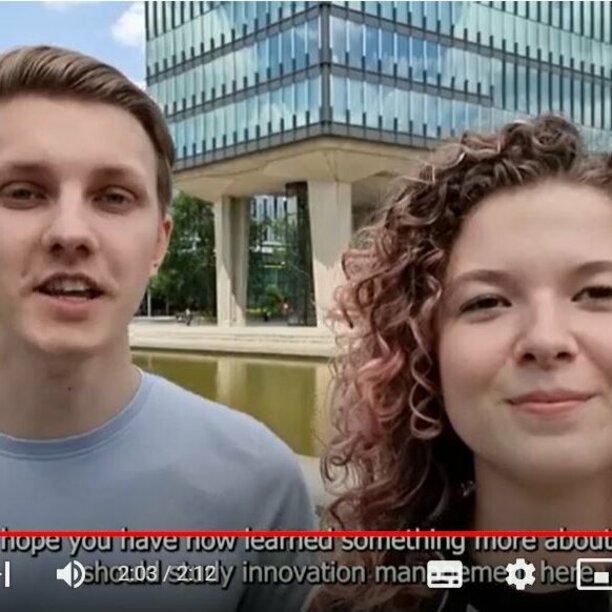
Daan en Iris vertellen je in deze video wat hun top 3 redenen zijn om de studie Innovation Management op de TU/e te volgen en nemen je ondertussen mee voor een kijkje op de campus.
Gerelateerde mastertracks
Vanaf september 2024 biedt het programma vijf tracks waarmee studenten zich kunnen specialiseren in een van deze drijvende krachten voor innovatie:
Binnen het masterprogramma Innovation Management bieden de tracks zorgvuldig samengestelde pakketten van vakken. Hierdoor krijgt iedere student een uniek profiel.
Bezoek ons
Wil je op de hoogte blijven van studeren aan de TU/e en onze voorlichtingsactiviteiten? Laat je gegevens achter en wij informeren je!
Studie in cijfers
Toon meer informatie-
4
Studenttevredenheid op een schaal van 1 tot 5
-
58
Aantal eerstejaars
-
91% - 9%
Nederlandse/internationale studenten
-
68%
Diploma binnen 3 jaar